Not all solid swellings in the liver are cancer , the commonest solid swelling in the liver that is not cancer is called a liver haemangioma.
A liver hemangioma is benign (not cancer) , they may be solitary ( one) or multiple.
Most people with liver hemangiomas have no symptoms and do not require medical treatment.
What Are Hemangiomas ?
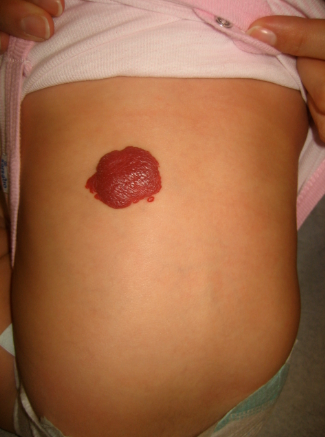
It is a collection of poorly formed blood vessels , and they can occur throughout the body. Most hemangiomas occur on the surface of the skin or just beneath it.
Skin Hemangioma (Red Swelling)
Liver hemangiomas are located on the surface of the liver or deep inside the liver.
What Causes Liver Hemangiomas ?
We don’t know why they occur , if you know , magnanimously share. They are commonly seen in females , we still don’t know why.
What Causes Liver Hemangiomas ?
Small hemangiomas cause no symptoms.
Severe right upper abdominal pain , seen in large hemangiomas.
Anemia , in large heamangiomas.
Tendency to bleed , in large heamangiomas.
How Do I Confirm That I Have A Liver Hemangioma ?
1. Ultrasound Scan
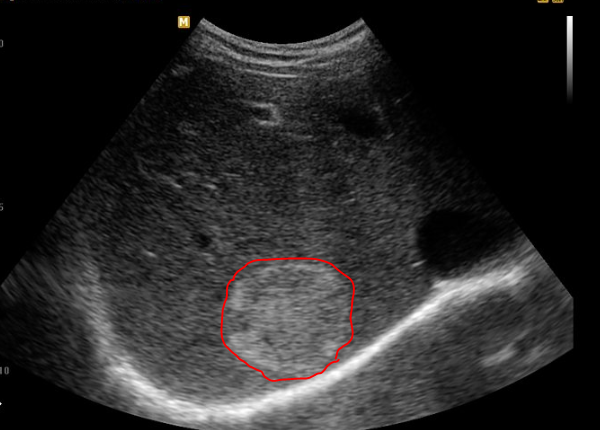
They typically appear white on ultrasound scan , of course not everything white is a liver hemangioma. Many hemangiomas are discovered incidentally on ultrasound.
A liver hemangioma ( red circle) on ultrasound
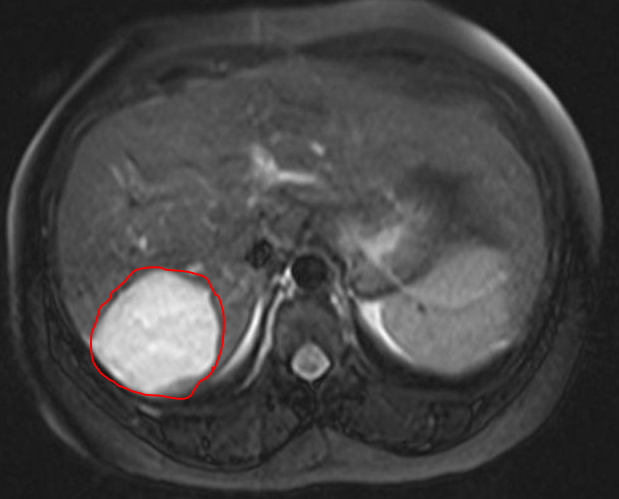
2. CT Scan or MRI Scan
Atypical liver hemangioma ( red circle) on MRI Scan
No Biopsy For Liver Hemangiomas
Hemangiomas have a typical appearance that scans are sufficient to confirm them. We agreed that a heamngioma is a swelling of blood vessels , so putting a needle ( biopsy) into a swelling of blood vessels obviously leads to life threatening bleeding. No biopsy for hemangiomas.
Embolisation For Liver Hemangiomas
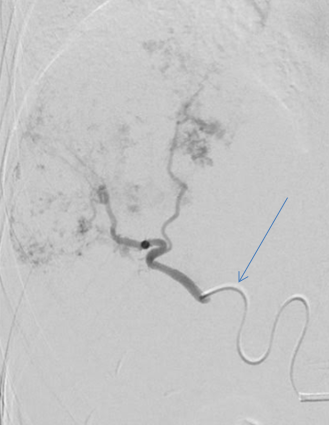
Through a small prick in a thigh or arm blood vessels , catheters are tracked into the blood vessels feeding the hemangioma. Treatment is administered into the haemangioma directly. The tumor then shrinks over time , will complete resolution of symptoms.
A Catheter ( arrow into the blood vessel feeding the hemangioma) , drugs injected only into the offending hemangioma.
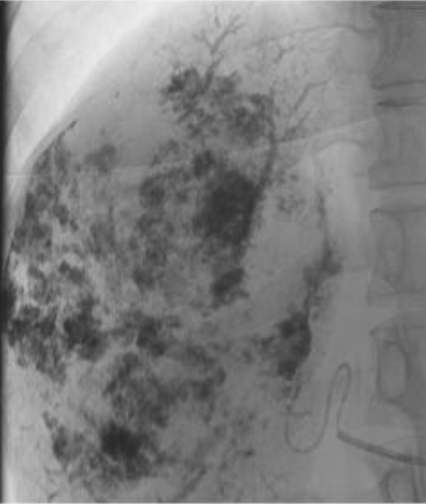
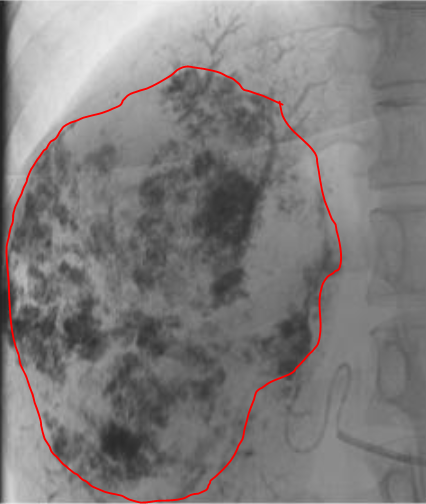
Drugs ( black stuff) injected into the liver hemangioma.
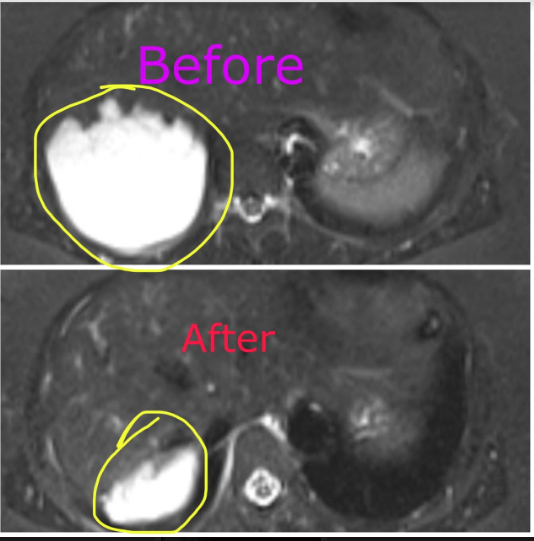
Liver hemangioma after treatment , this was really big , only big ones can symptoms so we treat those.
One year follow up below , 90 % shrinked , the rest will shrink with time , and we lose nothing giving it time to completely shrink , all symptoms (pain in this case) resolved after treatment (embolisation ).
Embolisation is a safe and highly effective way to treat symptomatic liver hemangiomas without surgery.
Liver hemangiomas causing symptoms can be treated , you do not need a biopsy to confirm that it is a hemangioma.